A
General PCD pharma franchise with monopoly rights is a business model in which a pharmaceutical company authorises a franchise partner to market and distribute its general-range medicines within a defined geographical territory.
The term "monopoly rights" generally means that the company agrees not to appoint another franchise partner for the same products in the agreed area, subject to the terms of the franchise agreement.
The concept provides a systematic entry into pharma marketing for entrepreneurs, distributors, medical representatives and pharma specialists without the need to set up a manufacturing unit.
But the business needs the right product selection, regulatory compliance, inventory planning and market development.
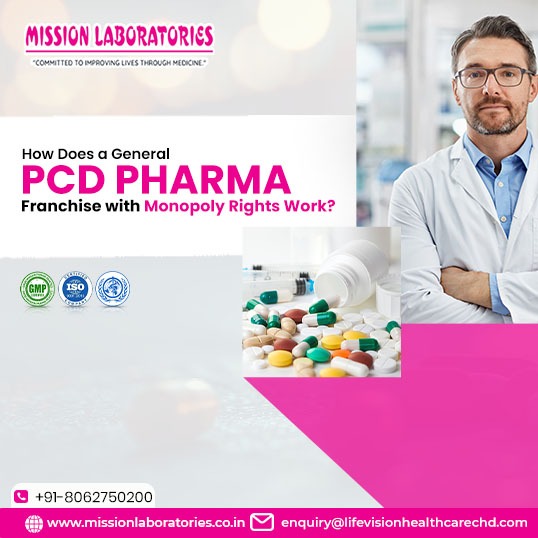
A General PCD Pharma Franchise focuses on commonly prescribed medicines used across multiple therapeutic categories. Even with this approach, depending on the company, the portfolio may include tablets, capsules, syrups, injections, ointments, powders, and other pharmaceutical formulations.
In short, the franchise partner purchases products from the pharmaceutical company and develops sales through doctors, pharmacies, hospitals, distributors, and other permitted channels according to applicable regulations.
PCD Pharma can give out business monopoly rights that are only valid in a defined region. The pharma company then signs a deal and passes those rights to a franchise partner.
For example, a firm may approve one General Medicine PCD Franchise with Monopoly Rights for a specific district. That partner gets sole rights for a set list of products. Those rights apply only to that product group and only inside the named district.
This structure can cut down on friction between franchise partners under the same brand. When each partner serves a different zone, there is less overlap in sales.
Even so, the monopoly is not always meant to last forever or to be completely unrestricted. What the rights really cover depends on the contract terms. The agreement spells out limits using the product list, the territory map, sales goals, payment terms, and other rules.
The general method involves the following steps:
The prospective franchise partner does research on pharmaceutical businesses which are offering general range PCD opportunities. Therefore, crucial areas to look at are:
Depending on what product and region are available, there are companies like Mission Laboratories that are franchise-oriented and sell pharmaceutical products.
The entrepreneur discusses the preferred location with the company. The territory may be a district, city, town or other area mutually agreed upon.
It is useful to know before you finalize the territory:
After negotiations on territories, the franchise partner can choose suitable products from the wide selection available within the organization. Further, the selection of products should be based on local prescription habits, market demand, therapeutic needs, cost and availability rather than choosing the largest possible list of products.
The company and franchise partner should mutually agree on the business terms of the General Pharma Franchise with Monopoly Rights. Depending on the company, the terms may cover the following aspects:
The exact rights and conditions should always be confirmed in writing.
After the commercial conditions are agreed, the franchise partner can place an order as per the company's requirements. Products are subsequently supplied for distribution and marketing in the designated territory.
Business is developed by the franchise partner within the defined territory. Depending on applicable rules and business relationships, this may include interaction with healthcare professionals, pharmacies, distributors and institutions. Follow-up, product availability, customer service and suitable promotion may also influence long-term business performance.
Before signing an agreement, prospective franchisees should think beyond the word “monopoly.” Think about:
The Mission Laboratories is among the best General PCD Pharma Franchise with Monopoly Rights. You may check the company’s pharmaceutical product range, business terms, territory availability and support structure. Likewise, a potential franchise partner should have a frank discussion with the organization about the precise criteria prior to making a commitment. So we have put up some key questions to ask yourself:
The General PCD Pharma Franchise with Monopoly Rights is a combination of pharmaceutical product distribution and territorial business rights. This approach can be excellent for entrepreneurs who want to start a pharma marketing firm with an established corporate product portfolio and supplier network.
Also, the trick is to check the product selection, area protection, paperwork, pricing, supply reliability, market demand and contractual terms before you start. Companies interested in Mission Laboratories can contact the company directly for further information on territory availability and franchising terms. All in all, it might help to decide if the offer fits in with their market and business needs.
Q1.What is meant by General PCD Pharma Franchise with Monopoly Rights?
Ans. It is a pharma business model in which a corporation gives marketing and distribution rights to a partner for its general medications in a certain territory.
Q2. What does monopoly rights represent in the PCD franchise?
Ans. The Monopoly rights are normally given for the territory exclusivity for the accepted products and the conditions and agreement of the company.
Q3. What are the goods included in a General PCD Pharma Franchise?
Ans. It may contain tablets, capsules, syrups, injections, antibiotics, analgesics, gastrointestinal medications, vitamins and some other generic formulations.
Q4. How to launch a general PCD Pharma Franchise?
Ans. Find a fit, check territorial availability, select products, evaluate the agreement, place an order and grow the local market.
Q5. Why Mission Laboratories for a generic PCD Franchise?
Ans. For Mission Laboratories, things like product line, where it’s sold, the cost, help with getting supplies, franchise rules, and more can be looked at.
Plot no 11-12, Dainik Bhaskar, Chandigarh 160014
Telephone: +91-8062750200
Email: enquiry@lifevisionhealthcarechd.com
2018- 2026 © Copyrights Owned By Mission Laboratories. Privacy Policy | T&C | Marketed By Hivends Info Solutions
 Tablets and Capsules
 Tablets
 Capsules
 Thyroid
 Liquid
 Pediatric
 Sachets
 Mouthwash / Paste
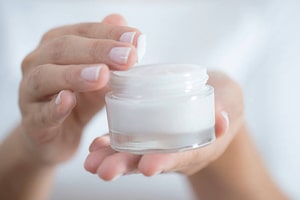 Creams /Ointments /Lotions
 Nasal Care
 Read About Us
 Director's Message
 Mission, Vision & Values
 Advance Ayurveda
 Blue Water Research
 Daniel Pasteur
 Advance Revive
 Care Botanicals
 Greenleaf Formulation
 Henin Lukinz
 Syntonix Biofarm
